

The Complete Guide to Orofacial Pain: Causes, Diagnosis, and Treatment Options
Orofacial pain treatment encompasses a broad spectrum of care designed to address discomfort affecting the face, jaw, mouth, and surrounding structures. For patients in Bethesda, MD, and across the greater Washington, DC, region, persistent jaw pain, facial aching, or recurring headaches can significantly affect daily quality of life, and finding the right specialists can make all the difference. Greater DC Specialists helps patients actively research their options: the causes of orofacial pain, how it is properly diagnosed, and the evidence-informed treatments available. Our board-certified, multi-specialty team welcomes patients from the local area, across the country, and around the world.
Understanding the Causes of Orofacial Pain and Common Conditions
Orofacial pain is not a single diagnosis. It is a category of conditions that share a common presentation: pain in or around the face and oral cavity, while arising from distinctly different sources. Identifying the underlying cause is the essential first step toward effective care.
Temporomandibular Joint Disorders
Temporomandibular joint (TMJ) disorders are among the most frequently encountered sources of orofacial pain. The TMJ connects the lower jaw to the skull and is involved in nearly every movement of the mouth. Inflammation, disc displacement, or structural irregularities within this joint may produce jaw pain, clicking or popping sounds, limited mouth opening, and radiating discomfort into the temples or ears. Our specialists in TMJ and orofacial pain are recognized by both the dental and medical communities for their expertise in diagnosing and managing these presentations.
Neuropathic and Musculoskeletal Pain
Some patients experience orofacial pain with no clearly visible dental cause. Neuropathic conditions, where nerve pathways transmit pain signals without an obvious injury, can be particularly challenging to identify without specialized evaluation. Musculoskeletal causes, including muscle tension from bruxism treatment candidates who grind or clench their teeth, also contribute significantly to chronic facial pain patterns.
Dental and Periodontal Sources
Tooth decay, cracked teeth, periodontal disease, and failing restorations can all produce referred pain that patients perceive as generalized facial discomfort. Our multi-specialty structure, encompassing prosthodontics and periodontics alongside TMJ and orofacial pain care, allows our team to identify and address dental contributors that a single-specialty practice might overlook. Individual results may vary depending on the complexity of each case.
What Diagnosing Orofacial Pain Involves
Accurate diagnosis is the cornerstone of meaningful orofacial pain treatment. In our practice, we find that patients often arrive having seen multiple providers without a clear answer. A thorough evaluation changes that.
Comprehensive Clinical Examination
A proper orofacial pain evaluation begins with a detailed health history, including a review of prior dental work, systemic conditions, medications, and the timeline of symptoms. The clinical examination assesses jaw range of motion, muscle tenderness upon palpation, joint sounds, bite relationship, and the condition of existing restorations. Our team uses advanced diagnostic technology to support clinical findings and build a complete picture of each patient’s presentation.
Imaging and Functional Assessment
Cone beam computed tomography (CBCT) and other imaging modalities provide three-dimensional views of the temporomandibular joints, bone architecture, and surrounding structures. This level of detail informs treatment planning in ways that conventional two-dimensional radiographs cannot. Functional assessment, evaluating how the teeth, muscles, and joints work together during movement, provides additional diagnostic clarity and helps our team distinguish structural causes from neuromuscular contributors.
Interdisciplinary Coordination
Because orofacial pain frequently involves overlapping dental and medical factors, our board-certified specialists coordinate across disciplines within the same practice. Patients who require evaluation for conditions such as obstructive sleep apnea treatment, which is closely associated with bruxism and jaw pain, benefit from this integrated approach without the delays of external referrals. Our team also collaborates with medical providers when systemic or neurological factors are identified during evaluation.
Orofacial Pain Treatment Options
Treatment for orofacial pain is individualized. There is no protocol that applies equally to every patient, and our specialists design care plans based on diagnosis, severity, patient history, and long-term goals.
Conservative and Non-Surgical Approaches
For many patients, orofacial pain treatment begins with the least invasive interventions. Custom occlusal splints and nightguards may help reduce muscle tension and protect the joints during sleep. Physical therapy referrals, behavioral modification for parafunctional habits, and anti-inflammatory strategies are commonly incorporated. Botox injections for muscle hyperactivity, including care for patients exploring Botox for migraines in Washington, D.C., and Bethesda, represent another well-tolerated option for appropriate candidates.
Restorative and Prosthetic Interventions
When orofacial pain arises from or is complicated by missing teeth, worn dentition, or failing restorations, restorative prosthodontic care becomes a critical part of treatment. Rebuilding proper occlusal relationships through dental restorations and prosthodontics may help stabilize the bite, relieve stress on the TMJ, and reduce associated muscle pain. Our prosthodontists bring board-certified expertise to these cases, including highly complex reconstructions that require both functional and aesthetic precision.
Surgical and Maxillofacial Interventions
A subset of patients with structural joint disease, degenerative conditions, or significant anatomical irregularities may benefit from surgical evaluation. TMJ surgery, when indicated, is performed by our specialists with extensive experience in managing both straightforward and highly complex cases. For patients with craniofacial conditions or significant tissue loss, our maxillofacial prosthodontics team provides specialized prosthetic rehabilitation to restore function and form with the highest level of care.
Why Choose Our Practice for Orofacial Pain Treatment in Bethesda, MD
Patients across Bethesda, MD, the greater Washington, DC area, and beyond choose our practice because of what a board-certified multi-specialty team makes possible under one roof. Our doctors hold certifications in general dentistry, prosthodontics, and periodontal dentistry, and our orofacial pain specialists are recognized by both the dental and medical communities. This breadth of expertise means patients with complex cases, those who have not found answers elsewhere, receive the coordinated care their conditions require.
Our doctors are not only practitioners but educators and leaders in their fields, contributing to the standards that guide orofacial pain treatment nationally and internationally. Whether your situation is relatively contained or involves multiple interrelated conditions, our team has the depth and technology to develop a care plan that reflects your specific diagnosis and goals. We invite you to schedule a consultation and experience the difference that genuine multi-specialty expertise provides.
Frequently Asked Questions About Orofacial Pain Treatment
How do I know if my jaw pain is a TMJ disorder or something else?
Jaw pain can arise from TMJ disorders, dental infections, muscle tension, nerve conditions, or systemic issues, and the symptoms often overlap. A thorough clinical evaluation, including examination of the joint, muscles, bite, and imaging when indicated, is the only reliable way to distinguish between these causes. Our orofacial pain specialists in Bethesda, MD, are trained to identify these distinctions and develop a diagnosis-driven treatment plan.
Is orofacial pain treatment always surgical?
The majority of patients respond well to conservative, non-surgical orofacial pain treatment, including splint therapy, muscle management, and restorative care. Surgery is considered only when non-surgical approaches have been exhausted or when structural findings clearly indicate that intervention is appropriate. Our multi-specialty team evaluates each case individually and prioritizes the least invasive pathway that effectively addresses the underlying cause.
Can orofacial pain be connected to sleep problems?
Yes, there is a recognized clinical relationship between orofacial pain, bruxism, and sleep-disordered breathing. Patients who grind or clench during sleep often experience worsened jaw and facial pain upon waking, and obstructive sleep apnea is frequently associated with these habits. Our practice evaluates these connections as part of a comprehensive workup, and treatment for sleep-related conditions may be coordinated alongside orofacial pain care when clinically appropriate.
How long does orofacial pain treatment typically take?
Treatment timelines vary considerably depending on the diagnosis, severity, and the care pathway selected. Some patients experience meaningful improvement in weeks with conservative management; others with structural joint disease or complex restorative needs require longer-term treatment over several months. Our specialists provide a realistic timeline during the initial consultation, based on your specific findings and treatment goals.
Do you treat patients who have not found answers at other practices?
Our practice regularly accepts patients who have seen multiple providers without resolution, locally from Bethesda, MD, nationally, and internationally. Our board-certified multi-specialty team is specifically equipped to evaluate complex and unresolved orofacial pain cases. The depth of credentials and the range of specialties available in one practice allow our doctors to identify contributors that may have been missed in single-specialty settings.
Schedule Your Orofacial Pain Treatment Consultation in Bethesda, MD
If you are living with jaw pain, facial discomfort, or recurring headaches and have not found a clear path forward, our board-certified multi-specialty team in Bethesda, MD, is here to help. Our specialists bring the credentials, technology, and interdisciplinary expertise to address orofacial pain treatment at every level of complexity. Contact our office to schedule a consultation and take the first step toward lasting relief.

Lauren M. Bolding DDS, MS, FACP
Dr. Bolding earned her Doctor of Dental Surgery (DDS) from New York University College of Dentistry and completed a Master of Science and Prosthodontics Residency at the University of Maryland. She further pursued advanced training in Maxillofacial Prosthetics and Dental Oncology at Memorial Sloan-Kettering Cancer Center and later earned a Master of Science in Orofacial Pain and Oral Medicine from the University of Southern California. A Board-Certified Maxillofacial Prosthodontist, Dr. Bolding is also a Fellow of the American College of Prosthodontists and a Diplomate of the American Board of Prosthodontics. She specializes in restoring oral and facial structures affected by cancer, trauma, or congenital conditions and treats complex cases involving orofacial pain, TMJ disorders, and advanced esthetic rehabilitation. Recognized by peers as a top doctor in the Greater DC area, she has also received the Joseph B. Barron Award for excellence in clinical care, education, and research. Dr. Bolding is a past President of the ACP–Maryland Chapter, served as Program Chair for the American Academy of Fixed Prosthodontics in 2024, and is a board member for the Foundation for Facial Recovery.
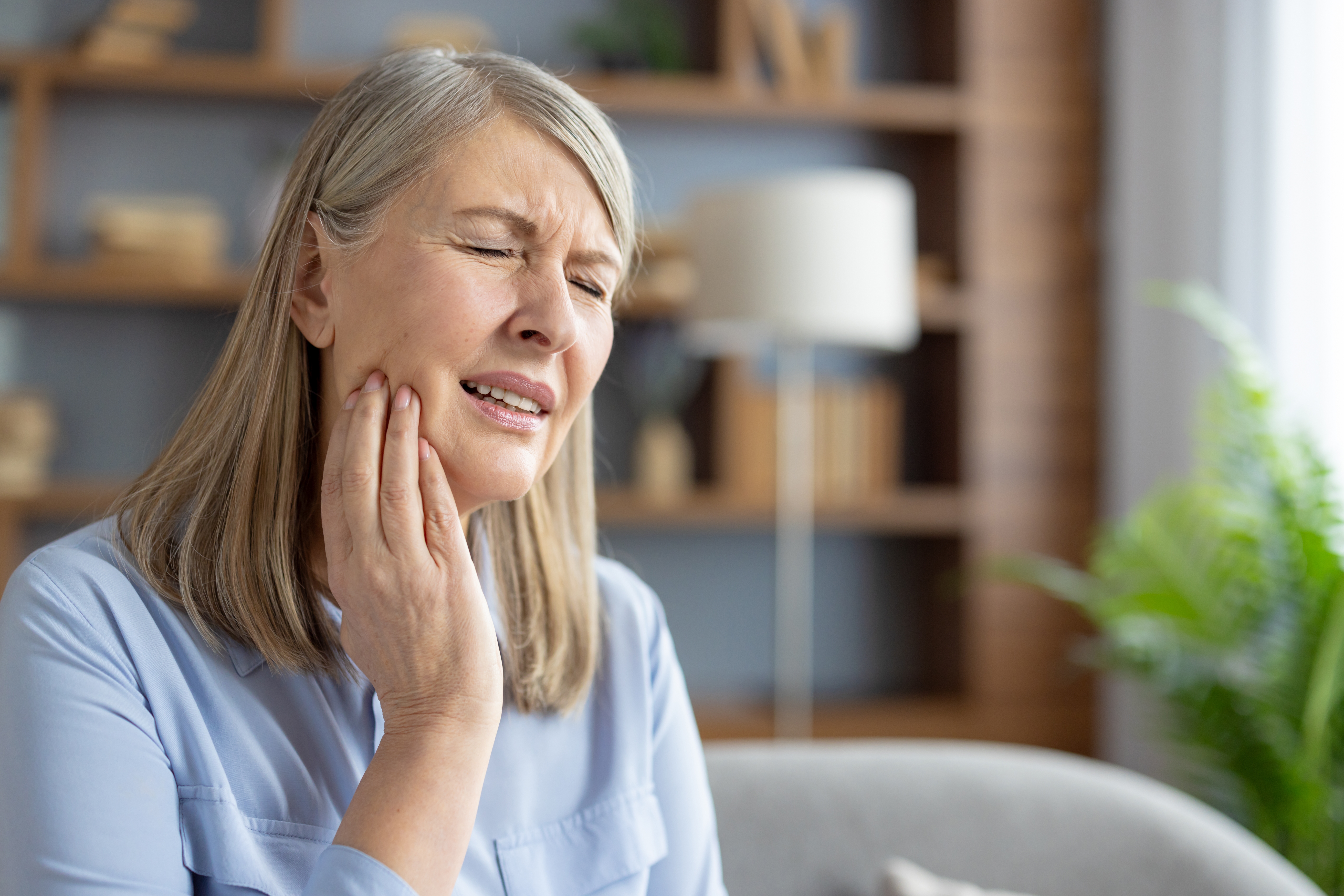
Bruxism, the involuntary grinding or clenching of teeth, can lead to significant discomfort and lasting dental and jaw joint problems if left…

Orofacial pain is a complex condition that affects the head, face, mouth, and jaw regions, causing discomfort and distress for many individuals. At…
Award-Winning Care
Dr. Kaplan has recently been awarded by the American College of Prosthodontists recognizing extraordinary collegiality, outreach, and community service.

