

Dentures in Washington DC/DMV area: Complete, Partial, and Implant-Supported Options
Many people face the challenge of missing teeth. Whether caused by age, genetics, injury, or dental disease, tooth loss can affect both confidence and everyday comfort. Fortunately, modern dentistry offers advanced denture solutions that restore smiles, improve chewing ability, and help patients regain their quality of life.
At Dental & TMJ Specialists of Greater DC in Bethesda, MD, our team helps patients understand their denture options and choose the treatment that best fits their goals. With careful planning and custom design, dentures can provide both a natural appearance and reliable function.
Complete Dentures
Complete dentures are designed for patients who have lost all their teeth in the upper jaw, lower jaw, or both. These restorations are custom-made to fit comfortably over the gums while restoring the appearance of natural teeth and supporting the lips and facial structure.
In many cases, complete dentures are placed after the gums have healed following tooth extractions, which can take several months. Many patients choose immediate dentures, which are placed the same day teeth are removed so they never have to go without teeth during the healing process. Because the gums and jawbone change as they heal, some adjustments are needed to maintain the best fit and comfort.
Complete dentures can significantly improve the ability to chew, speak clearly, and smile with confidence. Like any dental appliance, there is an adjustment period. Regular visits with the dentist help ensure the dentures remain comfortable and function properly over time.
Partial Dentures
When only a few teeth are missing, partial dentures may be the most conservative and cost-effective option. Partial dentures fill the gaps left by missing teeth and attach to the remaining natural teeth with a custom framework.
These restorations are typically made from a combination of durable acrylic and metal, providing strength, stability, and comfort. By replacing missing teeth, partial dentures help improve chewing ability, restore the appearance of your smile, and prevent surrounding teeth from shifting out of place.
Implant-Supported and Snap-In Dentures
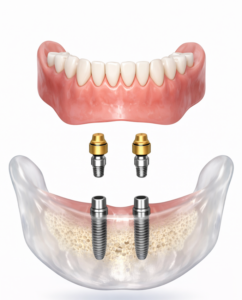
For patients seeking greater stability, implant-supported dentures—often called snap-in dentures—provide a more secure alternative to traditional removable dentures.
These dentures attach to dental implants placed in the jawbone, creating a strong foundation that holds the denture firmly in place. Many patients prefer implant dentures because they offer:
- Greater stability when chewing and speaking
- Less movement compared to traditional dentures
- Improved comfort and confidence
- Support for the jawbone, helping reduce bone loss after tooth loss
The treatment process typically involves placing dental implants and allowing time for the bone to heal and integrate with them. Once healing is complete, the denture is attached to special connectors that allow it to securely “snap” into place.
Although implant dentures require a greater initial investment, many patients find the improved stability, comfort, and long-term benefits well worth it.
Frequently Asked Questions About Dentures
How long do dentures last?
Most dentures last 5-10 years, although the exact lifespan depends on how well they are cared for and how the jawbone changes over time. Implants used for an implants supported denture usually last longer, but the denture portion may still need replacement or relining as the mouth changes. Regular dental visits help ensure your dentures last longer, remain comfortable and function properly.
Are Implant-supported dentures better than traditional dentures?
Implant-supported dentures, or snap-in dentures, are typically more stable than traditional dentures because they attach to dental implants in the jawbone. This added stability can improve chewing ability, speech, and overall comfort while reducing slipping or movement.
How many implants are needed for snap-in dentures?
Many snap-in dentures use 2-4 dental implants for support. The exact number depends on bone availability, anatomy, which jaw (upper or lower), and treatment goals. Your prosthodontist will recommend the best design after evaluating your jaw bone and imaging.
Can you eat normally with dentures?
Yes. Most patients can eat a wide variety of foods. Implant-supported dentures typically allow for stronger biting and more comfortable chewing compared to traditional dentures. Initially, patients are advised to start with softer foods while getting used to their new teeth.
Who is a good candidate for implant dentures?
Patients who are missing several or all their teeth and have sufficient jawbone to support dental implants may be good candidates for implant-supported dentures. In some cases, bone grafting can help rebuild bone if there has been significant bone loss. A consultation with imaging are needed to determine that.
Do dentures help with facial appearance?
Yes. Dentures help support the lips and facial muscles, which can prevent the “sunken” appearance that often occurs when teeth are missing. Replacing missing teeth can restore facial structure and improve the overall appearance of your smile.
Do dentures need to be removed at night?
Typically, it is recommended for cleaning and to allow the gums to rest. This helps to maintain healthy oral tissues and prevent irritation. Your dentist will provide specific instructions based on the type of denture you have.
Considering Dentures in the Washington DC area
If you are missing teeth and exploring your options, dentures can be an excellent way to restore both your smile and oral function. Whether you need complete dentures, partial dentures, or implant-supported snap-in dentures, at Dental & TMJ Specialists of Greater DC we take a personalized approach and work closely with each patient to create a custom treatment plan. As board-certified prosthodontists, we have completed years of additional specialty training focused on complex tooth replacement, including dentures and dental implants. This expertise allows us to create dentures that are carefully designed for optimal fit, comfort, function, and aesthetics.
If you are considering dentures or implant dentures in the Washington DC area, schedule a consultation to learn which option may be right for you. Schedule your appointment using our online contact form.

Sarit Kaplan, DMD, MS, FACP
Dr. Kaplan, this year’s recipient of the American College of Prosthodontists Private Practice Prosthodontist Award and Immediate Past President of the American Academy of Fixed Prosthodontics, is a board-certified prosthodontist dedicated to enhancing patients’ quality of life through advanced restorative care. She earned her Doctor of Dental Medicine degree from the Hadassah School of Dental Medicine and completed a rigorous three-year Prosthodontic Residency and Master of Science at the University of Maryland. With extensive experience in complex dental restorations, TMJ/TMD disorders, and Obstructive Sleep Apnea appliances, Dr. Kaplan is among a select group of specialists in the Greater DC area. A Fellow of the American College of Prosthodontists and Diplomate of the American Board of Prosthodontics, she has also served as a Clinical Assistant Professor at the University of Maryland Dental School and contributed research to leading dental journals. Dr. Kaplan continues to uphold her commitment to personalized, compassionate patient care.

Crafted by Prosthodontic Specialists for Beautiful, Natural Smiles
At Dental & TMJ Specialists of Greater DC, our board-certified…

At Dental & TMJ Specialists of Greater DC, we are proud to offer all our oral health services to the residents of Potomac and the surrounding…
Award-Winning Care
Dr. Kaplan has recently been awarded by the American College of Prosthodontists recognizing extraordinary collegiality, outreach, and community service.

