

Dental Implants FAQ: Your Questions Answered
Dental Implants FAQ: Your Questions Answered is our guide for patients in Bethesda, MD, and the greater Washington, DC area who want clear, authoritative guidance before moving forward with tooth replacement. Whether you are exploring dental implants for the first time or seeking a second opinion on a complex case, this page addresses the questions patients ask most often. At Greater DC Specialists, our board-certified multi-specialty team brings together prosthodontics, periodontics, and maxillofacial prosthodontics under one roof, so every answer here reflects genuine clinical depth, not generalized information.
Dental Implants FAQ: Your Questions Answered by Our Bethesda Specialists
What are dental implants and how do they work?
Dental implants are titanium or zirconia posts surgically placed into the jawbone to serve as stable foundations for replacement teeth. Once positioned, the implant integrates with surrounding bone through a process called osseointegration, creating a secure anchor for a crown, bridge, or full-arch restoration. Because the implant replicates the root structure of a natural tooth, it supports bone health in a way that traditional restorations cannot. At Greater DC Specialists, our board-certified prosthodontists and periodontists coordinate each phase of treatment so the implant, the supporting tissue, and the final restoration work together as one cohesive result.
What conditions or situations can dental implants address?
Dental implants may help patients who have lost one tooth, several teeth, or all teeth in an arch due to injury, decay, gum disease, or congenital conditions. They can also serve as anchors for implant-supported dentures when traditional removable prosthetics are no longer providing adequate function. Patients managing complex medical conditions and diseases that have affected their dentition may also be appropriate candidates. Our team evaluates each patient’s full medical and dental history before recommending a treatment path, because the right solution depends on bone density, tissue health, systemic health, and long-term goals.
How does the dental implant procedure work from start to finish?
The process typically begins with a comprehensive evaluation, including imaging to assess bone volume and tissue quality. If bone grafting or periodontal treatment is needed first, those steps are completed before implant placement. The implant post is then surgically positioned in the jaw, followed by a healing period during which osseointegration occurs. Once the implant is stable, an abutment is attached, and a custom crown or prosthetic is secured on top. Because Greater DC Specialists handles periodontics, prosthodontics, and maxillofacial prosthodontics in-house, patients move through each phase of care with continuity rather than referrals to multiple outside offices.
Am I a good candidate for dental implants?
Ideal candidates generally have adequate bone volume in the jaw, healthy gum tissue, and no uncontrolled systemic conditions that would impair healing. Non-smokers tend to experience more predictable outcomes, though many patients who smoke can still pursue implants with appropriate guidance. Age, overall health status, and medication history all factor into candidacy.
Patients who do not meet standard criteria at first evaluation may still qualify after preparatory treatments such as bone grafting or periodontal therapy. Our team at Greater DC Specialists conducts a thorough assessment during your consultation to determine whether dental implants are appropriate for your specific situation.
Who is the right patient for implant-supported full-arch restorations?
Implant-supported full-arch restorations may be well-suited for patients who have lost most or all of their teeth in one or both arches and want a fixed, stable alternative to removable dentures. Our guide to implant designs for single teeth and full arches compares the options. Patients who have experienced significant bone loss over time may require augmentation before this approach is feasible.
Our multi-specialty team at Greater DC Specialists has experience managing both routine and highly complex full-arch cases, including patients with underlying health challenges. Because our doctors are recognized by both dental and medical communities, we can coordinate care with your physicians when systemic health considerations are part of the planning process.
What should I expect at my dental implant consultation at Greater DC Specialists?
Your consultation will include a review of your medical and dental history, a clinical examination, and advanced imaging to evaluate bone structure and tissue condition. Our specialists discuss your functional goals, aesthetic preferences, and any concerns you may have about the process. You will receive a clear explanation of recommended treatment sequencing, the estimated number of appointments, and what each phase involves.
Because our practice uses advanced state-of-the-art technology, diagnostic imaging is precise, and treatment planning is thorough. Patients leave the consultation with a well-defined picture of their path forward.
How long does the full dental implant process take?
The timeline varies depending on each patient’s clinical needs. For patients with sufficient bone and healthy tissue, the process from implant placement to final restoration may take several months, primarily to allow for osseointegration. The final restoration is typically placed about three months after the implant has healed, and in many cases a temporary tooth can be placed the same day as the implant.
When preparatory procedures such as bone grafting or periodontal treatment are needed, the overall timeline extends accordingly. Complex cases involving full-arch reconstruction or patients with systemic health factors may require a longer, more staged approach. Greater DC Specialists provides each patient with a clear, individualized timeline at the planning stage so there are no surprises along the way.
What makes Greater DC Specialists different from other implant providers in the Bethesda area?
Greater DC Specialists brings together board-certified prosthodontists and a board-certified periodontist under one roof, which means every aspect of implant care, from tissue management and bone assessment to final restoration design, is handled by specialists working in direct collaboration. For patients with conditions affecting their oral structure, our periodontic care and maxillofacial prosthodontic expertise adds clinical depth to the planning.
What factors influence the cost of dental implants?
The cost of dental implants depends on several variables, including the number of implants needed, whether preparatory procedures such as bone grafting or periodontal treatment are required, the type of final restoration selected, and the complexity of your overall case. Single-tooth implants involve a different scope of work than full-arch reconstructions.
At Greater DC Specialists, we tailor treatment plans to each case and include advanced technology involved in your care. For specific cost information, we recommend scheduling a consultation so our team can assess your clinical needs and provide a clear, personalized estimate.
What is recovery like after dental implant surgery?
Most patients experience some swelling, mild discomfort, and sensitivity in the days following implant placement, which is well-tolerated with appropriate post-operative care. Our team provides detailed care instructions to support healing during the osseointegration period. Patients are generally advised to follow a modified diet and temporarily avoid certain activities.
Recovery experience varies depending on the extent of the procedure, whether bone grafting was performed, and individual healing factors. Our specialists monitor your progress at follow-up appointments and are available to address any concerns that arise.
Are dental implants a safe long-term tooth replacement option?
Dental implants have an extensive clinical history and are considered a well-established approach to tooth replacement when placed and maintained properly. As with any surgical procedure, there are risks, which our team discusses thoroughly during your consultation. Proper patient selection, precise surgical technique, and ongoing maintenance and aftercare all contribute to long-term success. Our board-certified periodontist monitors tissue health around implants as part of your continued care, and our practice’s ability to manage dental implants alongside complex systemic considerations means patients with health challenges are not automatically disqualified from consideration.
Why Choose Greater DC Specialists for Dental Implants in Bethesda?
Greater DC Specialists is a board-certified multi-specialty practice serving Bethesda and the greater Washington, DC region, with a team recognized by both dental and medical communities. Our prosthodontists, periodontists, and maxillofacial prosthodontic specialists work in direct collaboration, which means patients receive coordinated, comprehensive implant care without the fragmentation of multiple referrals. We are equipped to manage the full scope of implant cases, from straightforward single-tooth restorations to highly complex reconstructions in patients with significant health considerations. When you choose Greater DC Specialists, you are choosing specialist-level expertise at every stage of your care.
Schedule Your Dental Implant Consultation in Bethesda
If you are ready to explore dental implants in Bethesda, MD, the board-certified specialists at Greater DC Specialists are ready to evaluate your situation and outline a treatment plan tailored to your specific clinical needs and goals. Contact our office today to schedule your consultation and take the first step toward restoring function, confidence, and long-term oral health.
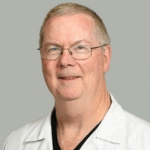
Carl Driscoll DMD, FACP
Dr. Driscoll is a Board-Certified Maxillofacial Prosthodontist who joined the Dental & TMJ Specialists of Greater DC in 2018. With decades of experience, he specializes in complex prosthodontic cases such as Ectodermal Dysplasia, Dentinogenesis Imperfecta, and Amelogenesis Imperfecta. A former Colonel in the U.S. Army, he led the Prosthodontic Residency Program at Walter Reed Army Medical Center before serving more than 20 years as Professor and Director at the University of Maryland School of Dentistry. Dr. Driscoll is a Diplomate of the American Board of Prosthodontics and a past President of the Academy of Fixed Prosthodontics, the American Board of Prosthodontics, and the American College of Prosthodontists. Widely recognized for his contributions to restorative dentistry, he has delivered over 450 lectures, authored more than 75 publications, and was named Educator of the Year by the American College of Prosthodontists.

Ask three people with implants what they have, and you may hear three different answers: a single crown, a fixed bridge across the whole upper jaw,…

A missing tooth rarely stays a small problem. Neighboring teeth drift into the gap, the opposing tooth can over-erupt, chewing shifts to one side,…
Award-Winning Care
Dr. Kaplan has recently been awarded by the American College of Prosthodontists recognizing extraordinary collegiality, outreach, and community service.

