

Dental Laser
With advances in medical laser technology, dental procedures have become easier than ever. With these unique dental lasers, our specialists at Dental & TMJ Specialists of Greater DC can now offer quicker treatment times, gentler treatment, and faster healing.
What are Dental Lasers?
Dental lasers are advanced, minimally invasive tools that can make the treatment and recovery process so much easier. From treating oral lesions and gum disease to offering pain therapy and teeth whitening, dental lasers allow us to provide the most comprehensive care. The dental soft tissue laser system we use at Dental & TMJ Specialists of Greater DC is the Biolase Laser.
The Biolase Dental Treatment
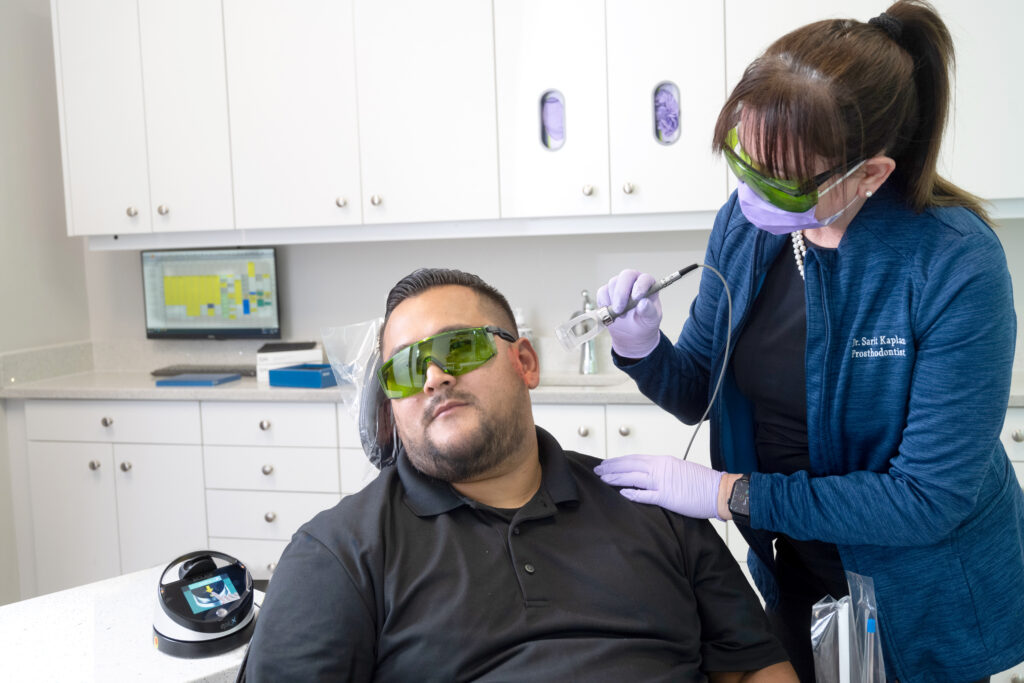
Our specialists at our Bethesda, MD office use the Epic Laser by Biolase. This laser uses focused light energy and thermal energy to ensure precise but gentle dental procedures. With the Epic Laser, you can look forward to shorter treatment and recovery times and less discomfort. This innovative dental laser can ensure you have a more relaxing and comfortable experience with us.
What Uses Do Laser Dentistry Treatments Have?
The Biolase Laser system and Epic Laser can help address many of the same issues that traditional dental procedures do. They treat oral lesions, gum disease, gum surgery, and gum staining.
Oral Lesions
For oral lesions like canker sores and cold sores, the Epic Laser is applied directly to the sore for only a few minutes. This not only provides relief from pain but also accelerates healing and can help patients avoid the need for prescription medication.
Pain Therapy
For patients struggling with dental and oral pain, the Epic Laser can provide extraordinary pain relief. With a quick 5-10 minute laser treatment, patients can experience temporary pain relief.
Dental laser treatment can also help relieve TMJ pain by increasing blood circulation and relaxing your muscles. With the Epic laser pain therapy at Dental & TMJ Specialists of Greater DC, you can find a reason to smile again.
Gum Disease and Oral Health
Bleeding gums, bad breath, and receding gums are all signs of gingivitis and gum disease. With the Epic Laser by Biolase, our specialists can gently remove bacteria and diseased tissue beneath the gums. We can easily treat gum disease at its source and ensure quick healing.
Gum Surgery
The Epic Laser is also effective for performing gum surgery. At Dental & TMJ Specialists of Greater DC, patients have found relief from the following gum concerns:
Remove Tags and Growths
For patients struggling with tags and growth, the Epic Laser can be the perfect solution. It is highly effective at removing small tags or growths on the cheek or tongue.
Treat Tongue Tie
Biolase’s Epic laser is also an effective tool for treating tongue tie. This condition occurs when the tissue that attaches the tongue to the floor of the mouth is too short or tight, which can affect speech. With the Epic Laser, we can remove the oral tissues, allowing the tongue to move as it should. This laser treatment allows for shorter recovery times and less need for an anesthetic.
Treat Gummy Smile
For those looking to enhance their smile by reducing the appearance of the gums, the Epic Laser is the perfect solution. During the laser procedure, your specialist will safely and gently remove excess gum tissue.
Implant Uncovery
The Epic Laser is also the perfect tool for implant uncovering. During this stage of the dental implant process, your specialist will use the laser to expose the top of the implant, and a healing cap will be attached to the implant to help shape the healthy tissue and prepare the area for the final prosthesis placement. With the Epic Laser, you’ll experience less discomfort and a shorter recovery time.
Depigmentation
The Epic laser is also highly effective at removing pigment from the gums. This excess melanin is typically caused by genetics and smoking, but with our dental laser treatment, we can easily remove the dark spots and leave you with a perfect, healthy-looking smile.
Teeth Whitening
At Dental & TMJ Specialists of Greater DC, we offer laser teeth whitening using the Epic Laser and LaserWhite20 gel. This quick and gentle treatment can give you the beautiful, brighter smile you desire.

What are the Benefits of Dental Lasers?
With our team at Dental & TMJ Specialists of Greater DC and the Epic Laser by Biolase, you can look forward to the following benefits:
- Quick and effective treatment
- Faster healing times
- Gentle procedures with minimal discomfort
- Shorter treatment times
- Less anesthetic needed
- Less bleeding
- More relaxing dental experience
Who is a Candidate for Laser-Based Dental Care?
Most patients are good candidates for dental laser treatment if they are struggling with oral lesions, gum disease, teeth staining, tongue tie, or oral pain, but there are some criteria we look for in potential candidates for this innovative treatment:
- In good overall health
- Looking for shorter treatment and recovery times
- Those with dental anxiety
- Patients who struggle with pain sensitivities
What to Expect with Laser Dental Treatment
What occurs during your dental laser procedure and how long your treatment takes depends on the issue being treated, but most dental laser procedures are straightforward. Your specialist will walk you through each step to ensure you are comfortable and know what to expect.
Dental Laser FAQs
How do dental lasers work?
Are dental lasers safe?
What procedures can be done with dental lasers?
Do dental laser procedures hurt?
Is recovery faster with dental laser treatment?
Can dental lasers help with tooth sensitivity?
What are the benefits of dental laser treatment?
Can dental lasers be used for cosmetic treatments?
Who is a candidate for dental laser treatment?
Are there disadvantages to dental lasers?
What issues can a dental laser treat?
What is recovery like with dental laser procedures?
Is any anesthetic used with dental laser procedures?
How long does dental laser treatment typically take?
Will I need multiple dental laser treatments for the best results?
What type of dental lasers are used in dentistry?
How are dental lasers different from traditional dental tools?
Are dental lasers used for children?
Do dental lasers replace the dental drill completely?
What protective measures are used during dental laser treatment?
Schedule a Dental Laser Therapy Consultation
Learn more about the benefits of laser or traditional gum surgery, dental fillings, and how to treat dental issues, and schedule a consultation with our team at Dental & TMJ Specialists of Greater DC today. Call our Bethesda, MD office at (301) 493-9500 or send us a message using our online contact form. We look forward to helping you achieve a healthy, beautiful smile and lasting oral and dental health.
Meet Our Dental Experts







Providing You State-Of-The-Art Dental & TMJ Treatment
We are here to help!
Please fill out the form to get started.
Award-Winning Care
Dr. Kaplan has recently been awarded by the American College of Prosthodontists recognizing extraordinary collegiality, outreach, and community service.

