

Restorations Prosthodontics
A dental restoration treatment is a dental procedure intended to restore the functionality and health of missing or damaged teeth. Whether you are looking to replace missing teeth, prevent tooth decay, or ensure the well-being of adjacent teeth, restorative dentistry may be right for you.
Dental Crowns
A crown (or cap) is a covering that encases the entire tooth surface restoring it to its original shape and size. It protects and strengthens tooth structure that cannot be restored with fillings or other types of restorations. Occasionally, a crown is used to improve the shape, color, bite or the alignment of the patient’s teeth.
Although there are several types of crowns, porcelain (tooth colored crown) are the most popular. They are highly durable and will last many years, but like most dental restorations, they may eventually need to be replaced. Porcelain crowns are made to match the shape, size, and color of the teeth giving patients a natural, long-lasting beautiful smile.
The purpose for restoring teeth with crowns are due to broken or fractured teeth, cosmetic enhancement, decayed teeth, fractured fillings, large fillings and teeth that have root canals.
E-Max Crowns
An E-max crown is an all-glass, ceramic, metal-free crown made from a high grade of durable, long-lasting ceramic called, lithium disilicate. It is a preferred choice by many patients due to its natural-looking esthetic qualities combined with its unlikelihood to be noticed amongst natural teeth. It is important to note that the E-max crown does not have a metal alloy base that avoids any unsightly-looking grey lines around the gum line.
Zirconia Crowns
All ceramic, Zirconia crowns are made from oxide of Zirconium. This highly favorable crown has grown in popularity the past few years because it can be fabricated very closely to the color of the patient’s natural tooth.
Fixed Bridge
Oral functionality and appearance are important reasons for wearing a bridge and provides support for the lips and cheeks.
Good oral health is the most important motivator when determining whether to wear a bridge. Teeth were designed to complement each other. If there are missing teeth, it can result in unusual stresses that are placed on the gums and other oral tissues. When teeth are missing, dental problems can occur such as the patient’s bite shifting. A dental bridge can help avoid the risk of fracturing the remaining teeth.
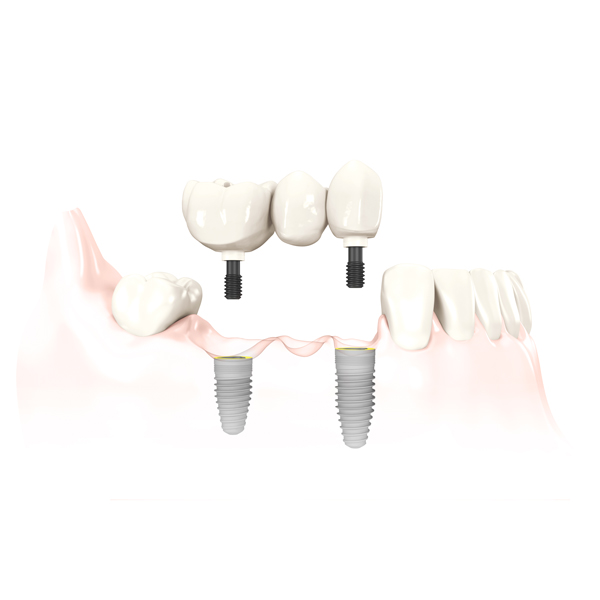
A dental bridge replaces multiple missing teeth. It literally “bridges” the gap created by one or more missing teeth. Using state-of-the-art materials, they feel and look completely natural. A bridge is a fixed replacement for the missing tooth and is anchored to either the patient’s natural teeth, dental crowns or implants. They are particularly useful for patients who have either chosen not to have dental implants or for those who are not recommended candidates.
Partial Dentures
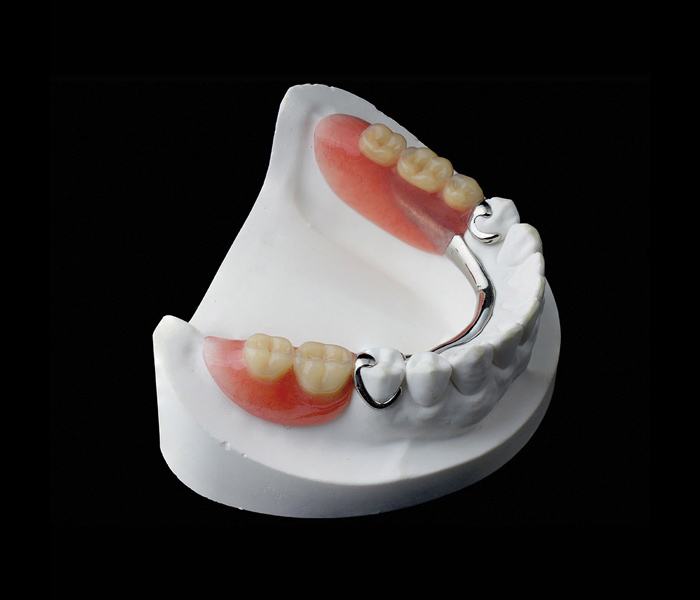
A partial denture is designed specifically to meet the needs of the patient by replacing one or more missing teeth. As a result, the patient regains their natural appearance and speech clarity is restored along with the ability to masticate food more efficiently, improving digestion. A partial denture may help limit the movement of the existing natural teeth as well as maintain the height of the face and support the joints.
Metal partial dentures are generally preferred as they are structurally superior. They are thinner and more hygienic than an acrylic partial. Acrylic partials are typically used as a transitional or temporary partial.
Drs. Kaplan, Bolding, Singer, and Driscoll always consult with their patients to determine the appropriate partial that best serves their needs.
A partial denture may have a metal framework and clasps that connect to the patient’s teeth that are often visible. This can be resolved with a more natural look by placing one or more implants, allowing the partial denture to snap-onto the implants and the clasps removed. In some cases, a removable partial denture is made to attach to the patient’s natural teeth or to implants with devices called precision attachments. Precision attachments are generally more esthetic than clasps.
A patient’s specific needs and anatomy dictate the design of the partial denture and every effort is made to fabricate a prosthesis that preserves the remaining teeth and oral tissues. Drs. Kaplan, Bolding, Singer, and Driscoll will design your partial denture so that the chewing forces are evenly distributed over the entire surface of the remaining teeth and soft tissues.
Changes to the remaining teeth may be recommended to help equalize these forces. As Prosthodontists, Drs. Kaplan, Bolding, Singer, and Driscoll have the additional education and training to provide patients with a comfortable, natural-looking partial denture.
Full Mouth Dentures
A full mouth denture or a complete denture, as it is often called, is an oral prosthesis replacing a patients’ full set of natural teeth. The prosthetic teeth are made of plastic, porcelain or a combination of both materials.
Patients can elect to wear either conventional dentures or implant dentures (removable) or fixed dentures (anchored):
A removable denture is kept in place by natural saliva suction and gripped to gum tissue or can snap-onto implants.
A fixed denture is attached to dental implants that are securely anchored to the denture and jawbone (see dental implants)
Many patients elect to wear dentures secured by implants which allow them to maintain a more natural quality of life.
Dentures over a normal course of time will wear and need to be replaced or relined in order to keep the jaw alignment normal. The alignment will slowly change as the bone and gum ridges recede or shrink due to the extraction of the teeth. Regular dental examinations are still important for the denture wearer so that the oral tissues can be checked for disease or change.
Immediate Dentures
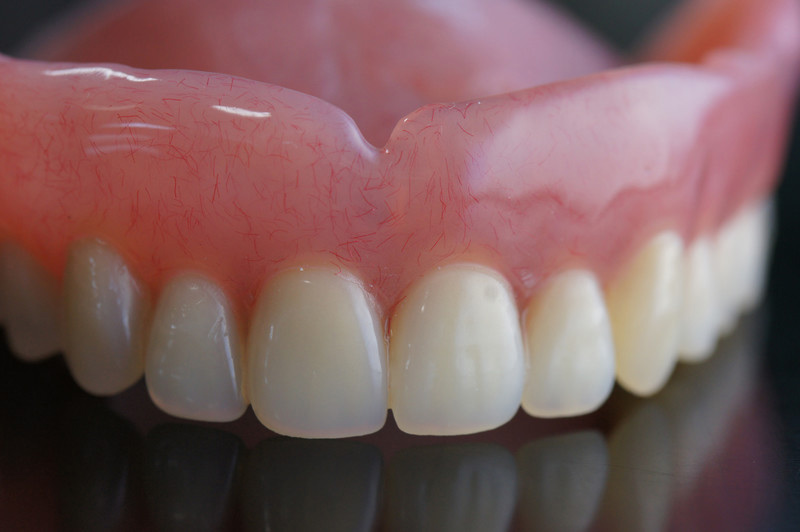
Unlike conventional or fixed dentures, immediate dentures are made prior to the day of surgery and can be positioned as soon as the teeth are extracted on the same day. As a result, the patient does not have to be without teeth during the healing period.
For patients transitioning to a complete arch prosthesis such as a removable denture or a fixed denture, the treatment plan will likely include an immediate denture, as well as the final denture. Our in-house dental lab allows us the ability to fabricate immediate dentures that are comfortable and natural-looking.
On the day of surgery, the immediate denture is delivered to the patient, allowing them to go home with replacement teeth. The immediate denture is used temporarily for esthetic and functional purposes while the gums heal and can act as a protective bandage at times. They also assist in providing an aesthetic assessment while preparing for the final prostheses that begin approximately three months after the day of surgery.
Providing You State-Of-The-Art
Dental & TMJ Treatment
Denture FAQs
Are dentures bad for your gums?
Are dentures comfortable?
Can dentures be put in permanently?
Can dentures look natural?
Can you brush your dentures?
Can you sleep in dentures?
Does medical insurance cover dentures?
How are permanent dentures put in?
How many teeth can you lose before you need dentures?
Should you keep dentures in water overnight?
What are the benefits of dentures?
What are the different types of dentures?
What is the difference between permanent dentures and implants?
What is the life of dentures?
Why do people get dentures?
Restore Your Smile
Greater DC Specialists is well-versed in expertly crafted dental crowns and bridges. Whether you need to strengthen a tooth or replace missing teeth, our team will provide the personalized care you deserve. Book a consultation today to enhance your oral health.
Award-Winning Care
Dr. Kaplan has recently been awarded by the American College of Prosthodontists recognizing extraordinary collegiality, outreach, and community service.

